

From time to time I open up the Daveberta newsletter to guest writers who have perspectives and thoughts they would like to share that might interest readers of this Substack. My friend Andy Grabia wrote today’s guest column about the decision by the University of Alberta administration to remove the historic Memorial Organ located in Convocation Hall and why the Alberta government should intervene to preserve this important war monument.
I have signed the open letter to Minister Andrew Boitchenko and Minister Myles McDougall calling on the government to use its legal authority under the Alberta Historical Resource Act to protect the Memorial Organ. Daveberta subscribers can sign the online petition here.
Here’s Andy Grabia’s column:
Albertans are acutely aware that in a few weeks, their government is asking them to vote in a referendum to have another referendum, which could ultimately lead to the province separating from the rest of Canada.
What most Albertans likely don’t know is that right now the Government of Alberta is also letting a Canadian War Memorial be split up and removed from its home at the University of Alberta.
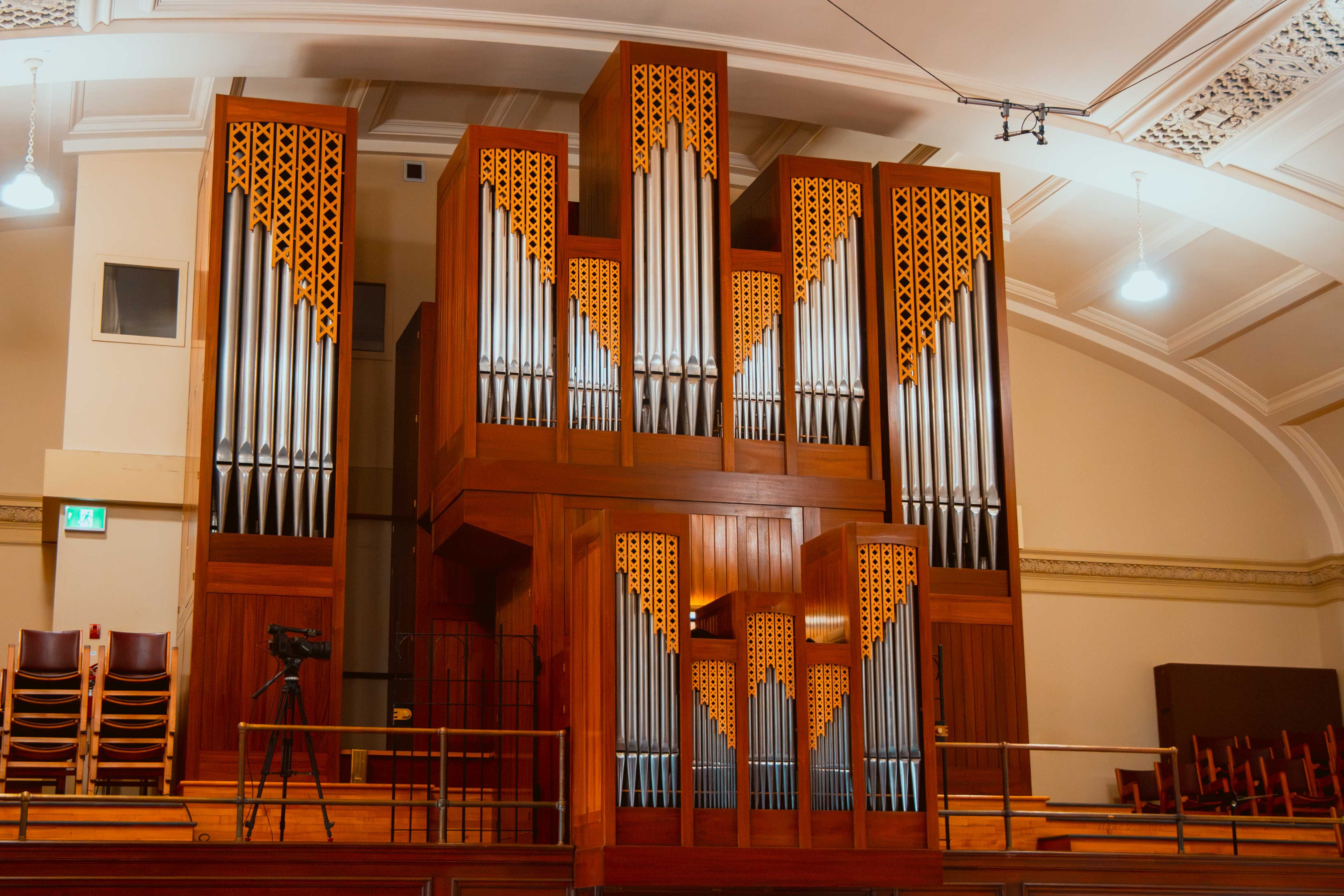
484 students and staff members from the U of A served in WWI. In 1925, a Casavant pipe organ was installed in Convocation Hall, inside the university’s Arts Building, and dedicated to the memory of the 82 men who did not return home.
The same organ was rededicated in 1945—this time to honour the 156 students who died in World War II—before a third dedication in 1978, when a new Casavant organ was installed. Accompanying plaques, listing the names of the 238 fallen, grace the walls just outside of the hall.
One of the names on those plaques is Robert Hampton Gray VC, DSC, the last Canadian to be awarded the Victoria Cross, the highest military honor one can receive in our country.
There is zero doubt that the Memorial Organ is a war monument. Even the university has admitted as much.
Yet in August, the university announced that it was transferring the Memorial Organ to the Netherland Reformed Congregation in Picture Butte, Alberta. The current plan calls for the organ to be dismantled and shipped off to southern Alberta, where it will remain in crates until such time as a facility can be built to hold it. The plaques listing the names of the 238 dead servicemen will remain in the Arts Building.
This is wrong. The plaques are important, but it is the organ that is paramount. Music was the medium by which the community wanted to mourn the loss of their friends and colleagues, and as such the organ was specifically chosen over other means of remembrance.
It is also unclear how any commitment to the remembrance of these men can be upheld when the organ that was built to honour them is being sent to a private church five hours away from Edmonton, packed away in a warehouse, with nothing other than the church’s word that it will ever assemble it again, let alone keep it, maintain it, and make it accessible to the public.
Provincial law on this issue is not complicated. The Alberta Historical Resource Act (AHRA) grants the Minister of Tourism and Sport the authority to pause the removal and transfer of the Memorial Organ, as well as designate it as a historical resource. This is a power granted only to the Minister, as provincial laws currently prevent the City of Edmonton from designating and protecting any buildings on the U of A campus.
To date, the Government of Alberta has been silent on the matter. Why?
Over the summer, letters and briefing notes from those opposed to the Memorial Organ’s removal were sent to Premier Danielle Smith, Minister Andrew Boitchenko, Minister Tanya Fir, and Minister Myles McDougall, so it’s not a question of the government being unaware of what is happening. Minister Boitchenko even replied on behalf of the premier, saying that it was up to the university to decide on the organ’s removal.
Since it is actually Minister Boitchenko’s responsibility under the AHRA to determine the historical status and designation of the Memorial Organ, not the university’s, this is a dereliction of duty. It also makes no sense to anyone watching Alberta politics since the United Conservative Party (UCP) were elected, as they have shown zero hesitation in wading into issues normally left to its municipalities and public agencies.
Conservatives have always been the biggest supporters of the country’s military and veterans, so reluctance on that front doesn’t make sense, either. The UCP has inflicted large budget cuts on the U of A since Jason Kenney was premier. Could it be that the government is willing to sacrifice a War Memorial in order to see the university’s cost-cutting measures continue?
I think the answer is much simpler. I think the answer is that the Government of Alberta is currently run by a political party where half of its members want to separate from Canada, and unfortunately placating those members has become the government’s only focus. Why go out of your way to publicly protect a War Memorial honoring Canadian soldiers when you are currently spending all your time trashing Ottawa and appeasing people who talk about joining the United States? Better to just lay low and let the issue pass by.
Except this is no regular issue.
We are four and a half weeks from October 19, and a vote that will greatly alter this country’s future, one way or another. At the same time, we are dealing with a powerful and increasingly hostile government south of the border, one that has repeatedly mocked our toughness and challenged our sovereignty.
The Memorial Organ in Convocation Hall is not only a monument to the 238 U of A students and staff who died in the first two world wars. It is a reminder of Canada’s emergence as a nation. U of A soldiers lost their lives at Ypres, Vimy Ridge, and in the Battle of the Somme. More died in Normandy, the Italian Campaign, and the Liberation of the Netherlands. These men fought under the toughest conditions, in the toughest of battles, not just to defend our freedoms, but to defend our country’s very existence.
What better time than now, in the face of those who wish to tear this country apart, to reaffirm their service and their fidelity?
Alberta has 87 Members of the Legislative Assembly, 37 Members of Parliament, along with 6 Senators. It also has a Prime Minister raised in Edmonton, whose father taught at the University of Alberta, along with a handful of groups like Forever Canadian fighting to keep Alberta in Canada. I do not know the hearts and minds of all these people (Dave has a good breakdown on who stands where), but I do hope many of them see this post, and are moved to help save this significant Canadian war memorial.
Premier Smith herself has stated that she is in favour of Alberta remaining in confederation, but to date there hasn’t been much action behind those words. Here is her opportunity. It is my hope that she will instruct Minister Boitchenko to use the powers given to him under the Alberta Historic Resources Act to halt the removal of the Memorial Organ from Convocation Hall, and then designate it a provincial historic resource. It is a monument worthy of our protection, as the dead it memorializes are worthy of our remembrance.
Learn more about the Memorial Organ at uniteforthepipes.ca.
Andy Grabia is a University of Alberta alumnus (BEd ’02, BA ’22) and former board member at the Edmonton Heritage Council.
I was dismayed when I first heard of the potential removal of this instrument, but this is the first I have heard of where it might end up. Loss of this instrument will be a complete betrayal of the sacrifices of generations past.
Myles McDougall is my MLA he does nothing. Ever. Talk to a brick same response. His job description is vote yes to anything Danielle proposes and hand out pancakes for stampede. Period.