

From time to time I open up the Daveberta newsletter to guest writers who have perspectives and thoughts they would like to share that might interest the politically astute readers of this Substack. Edmonton City Councillor Michael Janz wrote today’s guest column about the need for more regional sharing of responsibilities and resources when it comes to public safety and municipal policing in the Edmonton area.
Here’s Michael Janz:
Edmontonians are getting a raw deal in the region. Just over 10 years ago, the Edmonton Chamber of Commerce suggested amalgamation of the region, or at least of certain services, most notably, public safety.
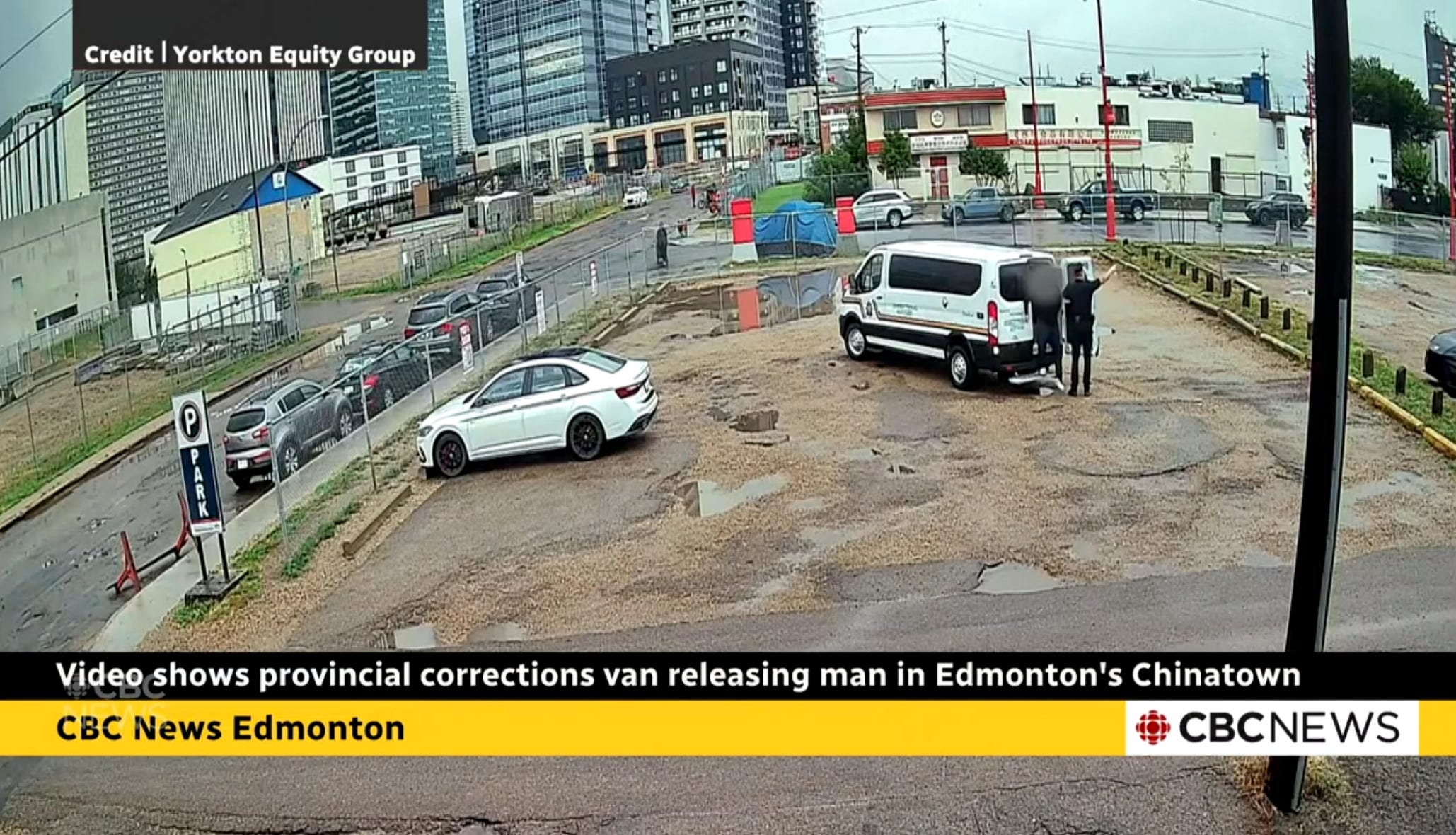
With the recent shocking videos of prisoners being dropped in parking lots in Chinatown, safety has been on everyone’s mind. There are easy solutions, but like most political problems it comes down to a question of budget and political will: who should pay?
For far too long a patchwork of policies have impeded both our shared public safety, the public interest of taxpayers, and economic attractiveness in the Capital region.
Across all municipal budgets, there is no greater municipal cost driver than public safety. My proposal respects local governments and community autonomy while improving safety and economic outcomes. It is time for a regional public safety approach funded by the pooling per capita of non-residential property tax in the region.
Why now?
With the provincial police force conversation underway, we would be wise to chart our own path before provincial imposition. Within the region, crime knows no boundary. Fortunately, economic growth knows no boundary either.
A common safety formula would serve the capital region, but to ensure fairness would be funded by the collective non-residential tax revenue. and pool it on a per capita basis to pay for policing, shelters, and safety initiatives across the region. There is no greater municipal cost driver than public safety.
In Edmonton, policing costs are the largest portion of our taxes. Due to a guaranteed funding formula, up to 30% of the city budget according to the police funding formula goes directly to policing. Taxpayers have added over $150 million to the police budget in Edmonton since I was elected in 2021.
Part of our higher policing costs are due to the high concentration of prisons in the area, all of which discharge into Edmonton. For smaller municipalities across the region, policing costs are considerable as well, and climbing every year. With more revenue and a little political will, St. Albert would have the funds to finally start their youth transitional housing program. Leduc would have funds to reopen their winter warming shelter.
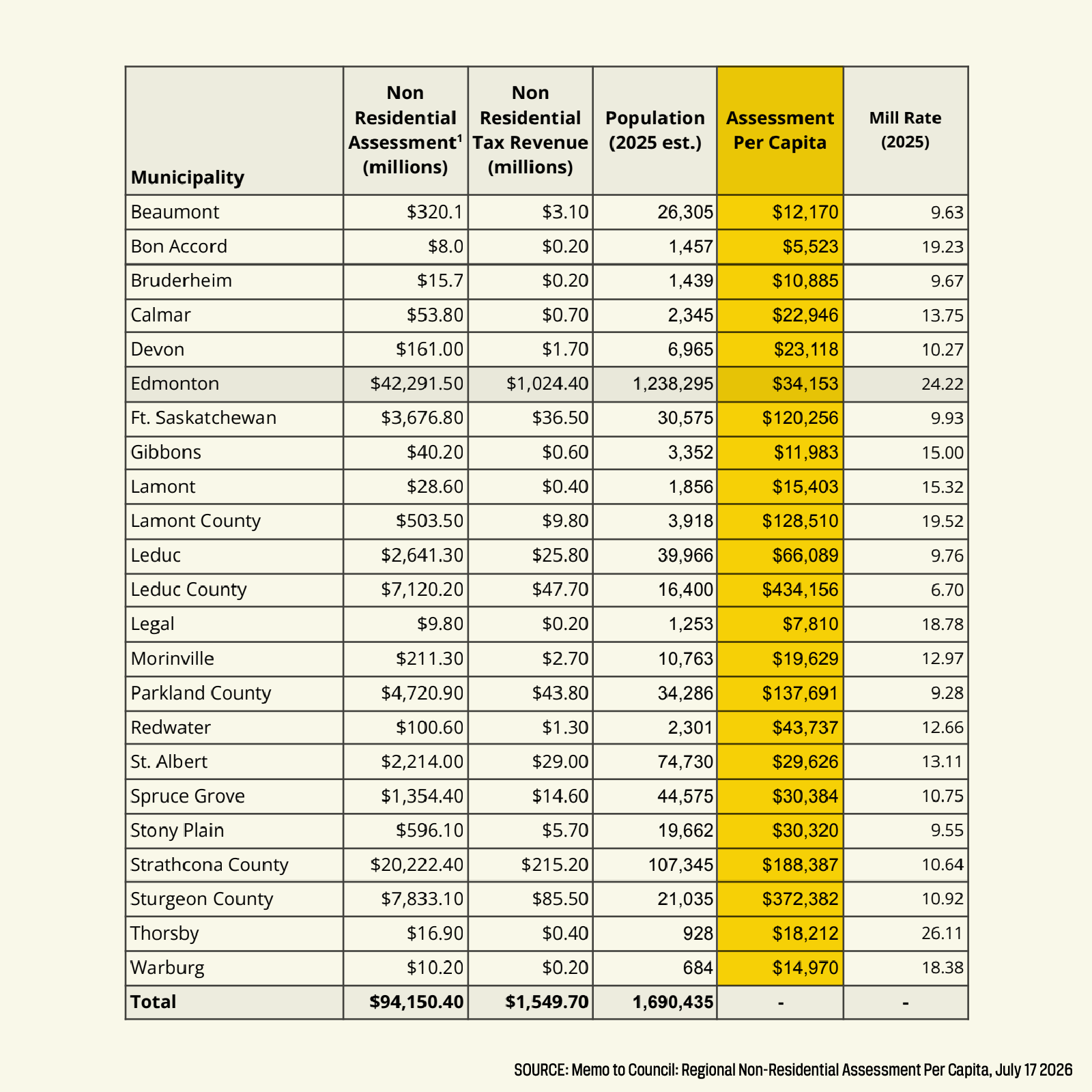
In other words, all of the non-residential tax revenue from across the region would be pooled and allocated per capita to each municipality to pay for the public safety costs. This would help cover the Edmonton Police budget as well as the RCMP policing contracts for each community. St. Albert for comparison spends 24 times less than Edmonton - about $25 million on policing costs.
Like Education property tax which is pooled and allocated to students across the province, Non-residential tax revenue belongs to all of the region- whether it is refining resources in the ground that belong to all Albertans. While a refinery might be here, the labour for the refinery might be there, and they all might depend on the airport, highways, and services from everywhere. Labour, and goods, move across municipal boundaries just like families, students, or athletes. Just like with education, there is a strong case for revenue smoothing, especially when it is being spent on a critical area of common benefit: public safety.
Meanwhile, Edmontonians are unfairly saddled with the most expensive, most complex, and most dangerous problems - discharged prisoners, hospital patients, youth and those who need help. All of these Albertans on the streets of Edmonton need help.
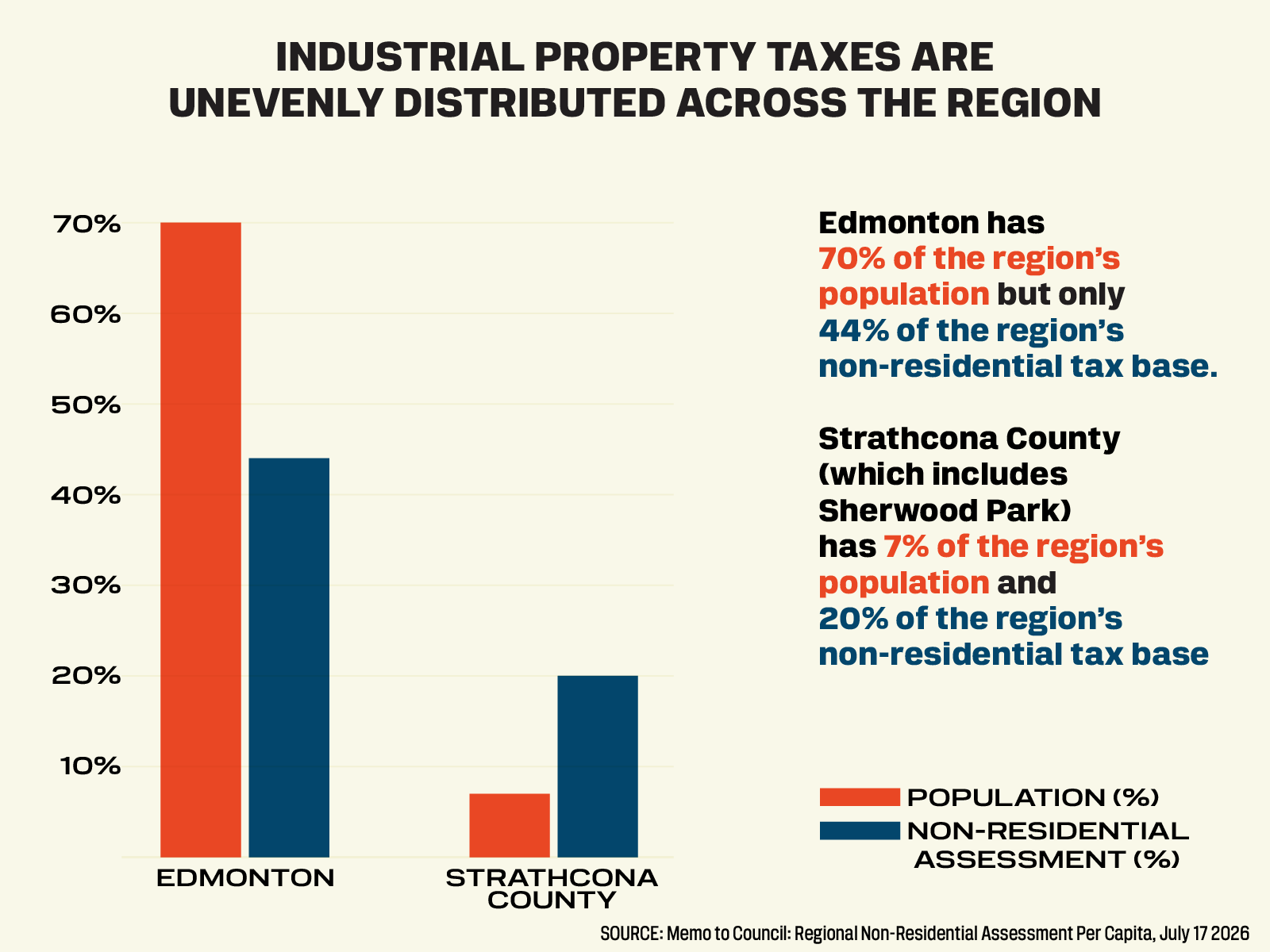
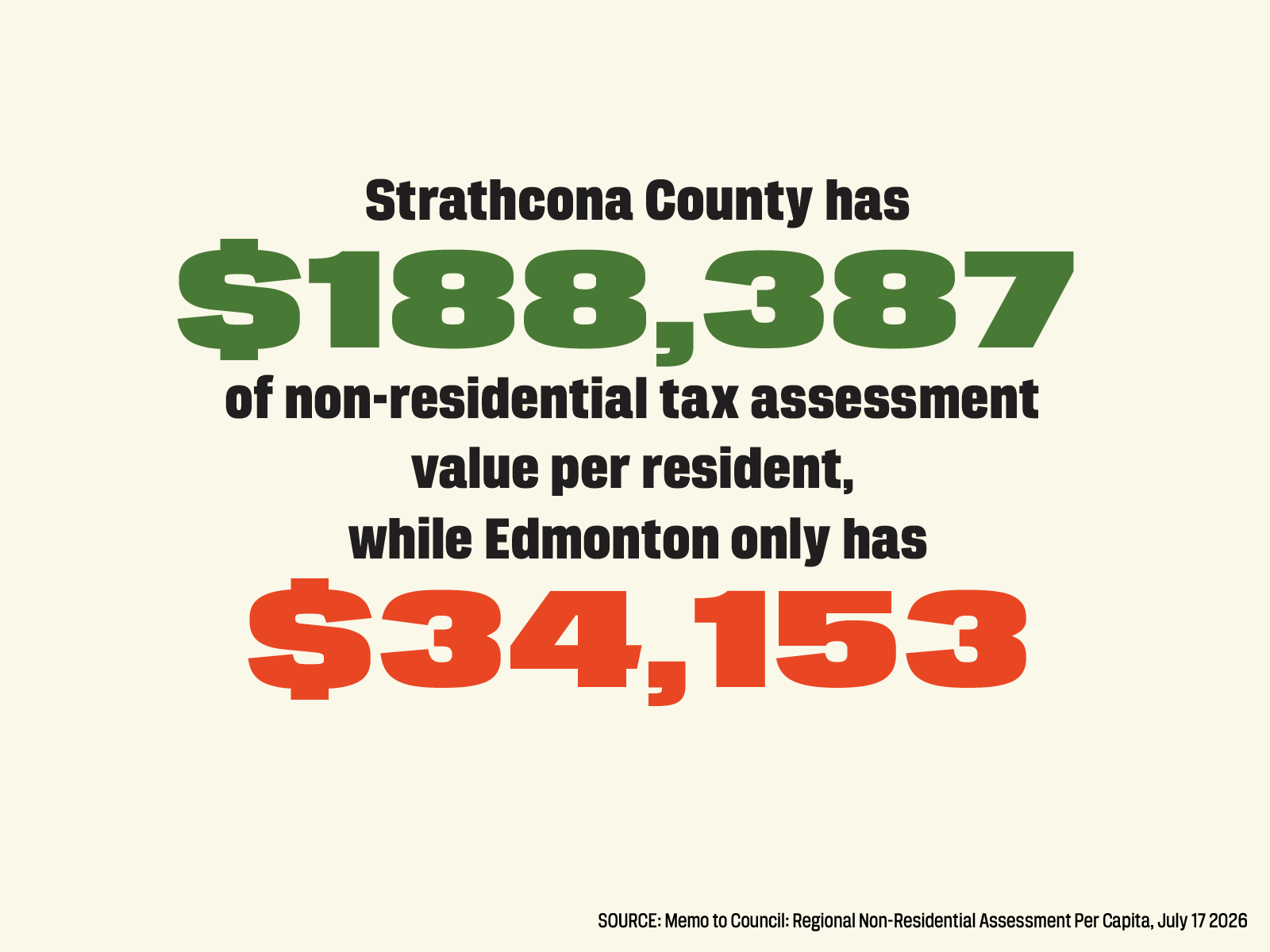
Industrial revenue is already unevenly distributed across the region. Edmonton, for example, has 70% of the region’s population, but only collects taxes on 44% of the region’s non-residential base. Meanwhile, just 7% of the region’s population in Strathcona County benefit from non-residential taxes on 20% of the region’s assessed value. Your fair share of municipal taxes shouldn’t vary wildly just because you happen to live on the other side of a boundary road, and it’s scandalous that this hasn’t been addressed sooner.
If we pool our regional non-residential taxes to tackle public safety problems, the vast majority of residents in the region would benefit. Most municipalities would be in a better position to manage the challenges we’re facing without putting the squeeze on residents or the non-residential base we do have. Balancing out the inequities in the region’s non-residential tax base could be done over time, acknowledging that some municipalities will see big changes in the other direction. Natural resources belong to all Albertans.
This is not without precedent. In 1994, the Government of Alberta under Ralph Klein centralized control of the education property tax, pooling revenues then allocating on a per pupil basis. School boards lost their power of local taxation, but the decision was that it was unfair to see “have and have not” schools sink or swim based on arbitrary lines around local tax revenue. Following the same logic, a similar harmonization of non-residential tax revenue could be allocated toward safety and well-being initiatives. Industrial revenue belongs to all Albertans.
The United Conservative Party promised action on public safety. Fixing a century of inequitable property taxation would provide the funding to deliver on their promise.
Michael Janz is the Edmonton City Councillor for Ward papastew. He has served on City Council since 2021 and was a trustee on the Edmonton Public School Board from 2010 to 2021. He is attending the Alberta Municipalities conference in Edmonton this week.


100%. And if not, let's start pooling some funds to send ubers after chinatown drop offs, one way to Leduc/St. Albert. We'll see how quick things change after that.